Plank Exercise
Importance of Planks
The plank is a foundational isometric exercise that's absolutely crucial for building core strength and stability. In today's sedentary office environment, weak core muscles are a major contributor to back pain, poor posture, and injuries. Planks are essential because they engage your deep stabilizing muscles without excessive joint stress. They improve posture, reduce back pain, enhance athletic performance, and provide a foundation for all other exercises. Whether you're a beginner or advanced athlete, the plank is a non-negotiable exercise for optimal health and fitness.
How To Do
- Start on your forearms and toes, facing the ground
- Position elbows directly under shoulders
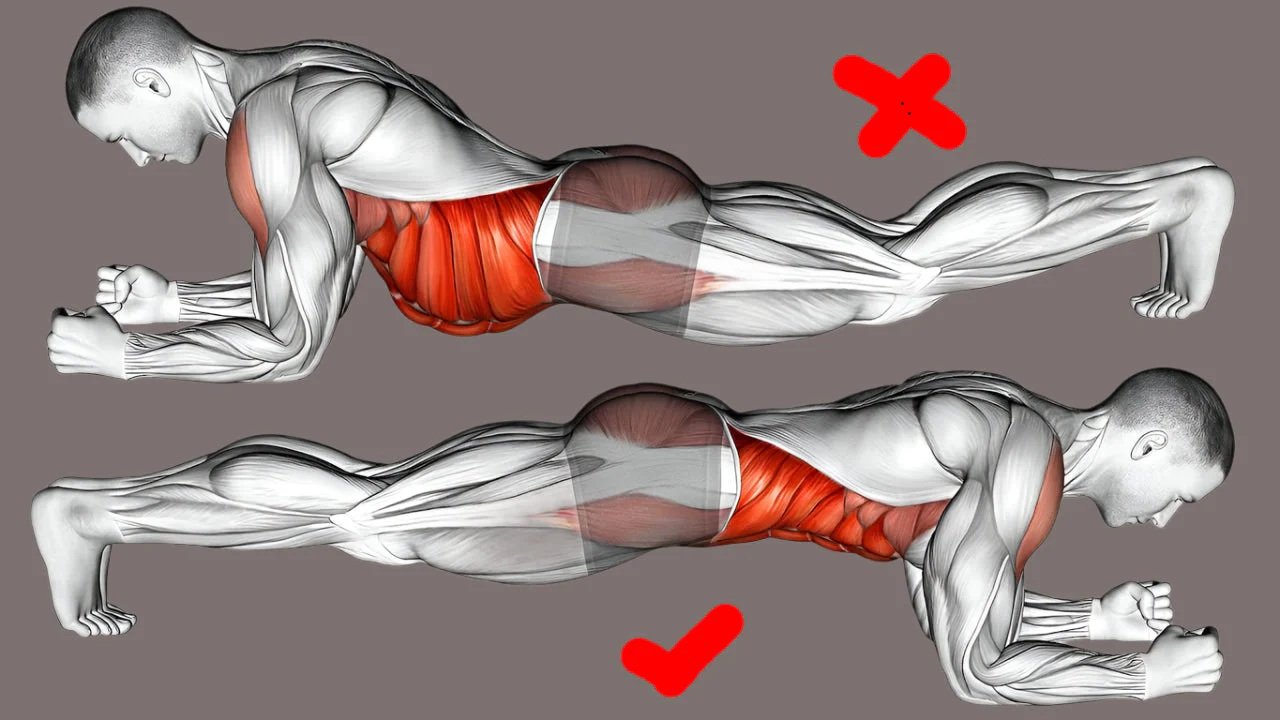
- Keep your body in a straight line from head to heels
- Engage your core muscles tightly
- Don't let hips sag or pike upward
- Maintain steady breathing - don't hold your breath
- Keep neck neutral by looking slightly ahead
- Hold this position for 20-60 seconds or longer
- Rest and repeat for 3-5 sets
Benefits & Advantages
- Core Strengthening: Engages all abdominal muscles including deep stabilizers
- Improved Posture: Strengthens muscles that support proper spinal alignment
- Back Pain Relief: Reduces strain on lower back through core support
- Enhanced Stability: Improves balance and coordination in daily activities
- Functional Fitness: Translates to better performance in sports and daily tasks
- Injury Prevention: Protects against common strains and muscle imbalances
- Metabolic Boost: Large muscle engagement increases calorie expenditure
- Low Joint Impact: Minimal stress on knees, hips, and spine
Pros
- Extremely effective for core engagement
- Minimal equipment needed (mat optional)
- Safe and low-impact exercise
- Can be done anywhere, anytime
- Scalable for all fitness levels
- Quick results - improves within weeks
- Improves posture and spinal health
Cons
- Can be uncomfortable on elbows
- Requires significant core strength to maintain form
- Boring if done without variation
- May cause wrist strain in push-up position variant
- Beginners may struggle with longer holds
Tips for Better Performance
- Engage core before holding the plank
- Keep elbows directly under shoulders
- Imagine bracing your core as if anticipating a punch
- Use a padded mat to protect elbows
- Gradually increase hold duration over time
- Breathe steadily - in through nose, out through mouth
- Squeeze glutes to maintain posterior pelvic tilt
- Focus on quality over duration
Precautions
- Don't let hips sag - maintain neutral alignment
- Avoid hiking hips too high
- Don't hold your breath - breathe constantly
- Stop if you feel sharp pain (not just muscle fatigue)
- Don't strain your neck - keep it neutral
- Avoid on very hard surfaces without padding
- Don't overextend if experiencing shoulder pain
When To Avoid
- Recent abdominal surgery
- Severe lower back pain or herniated disc
- Shoulder injuries or impingement
- Elbow tendinitis or severe strain
- Late-stage pregnancy (without medical approval)
- Diastasis recti without proper progression
Progressive Variations & Modifications
- Wall Plank: For beginners - hands on wall, body at angle
- Incline Plank: Hands on elevated surface (bench) to reduce difficulty
- Push-Up Plank: Same position as starting push-up for hand/wrist engagement
- Side Plank: Excellent for obliques and lateral core stability
- Plank with Leg Lift: Alternate lifting legs to increase difficulty
- Plank with Arm Reach: Reach one arm forward to challenge stability
- Decline Plank: Feet elevated - advanced variation for maximum difficulty
- Plank to Down Dog: Dynamic variation combining plank with yoga movement